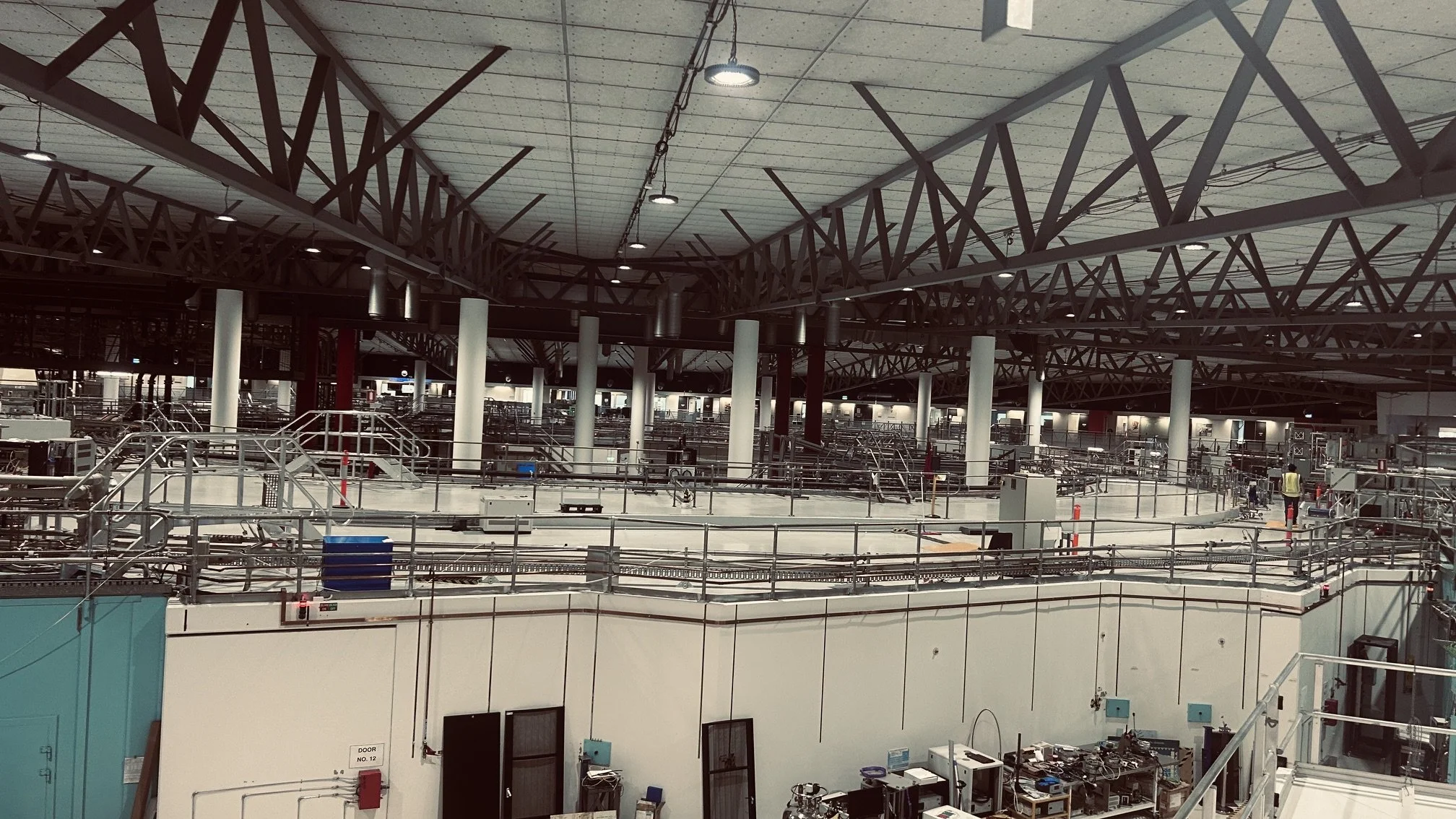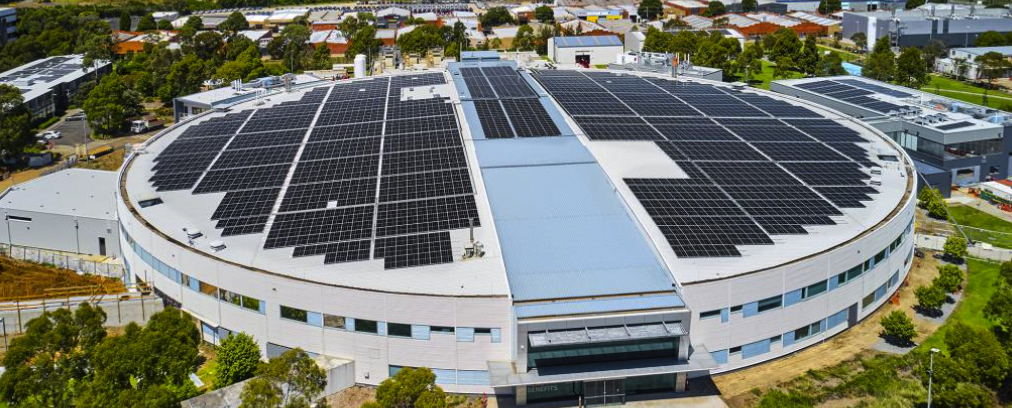
The Australian Synchrotron produces incredibly bright light, in frequencies ranging from infra-red to hard X-rays, for the purpose of enabling high impact, research.
It works by accelerating a beam of electrons to nearly the speed of light inside a circular vacuum chamber hundreds of meters in circumference, called a storage ring. To do this, a complex of particle accelerators is required.
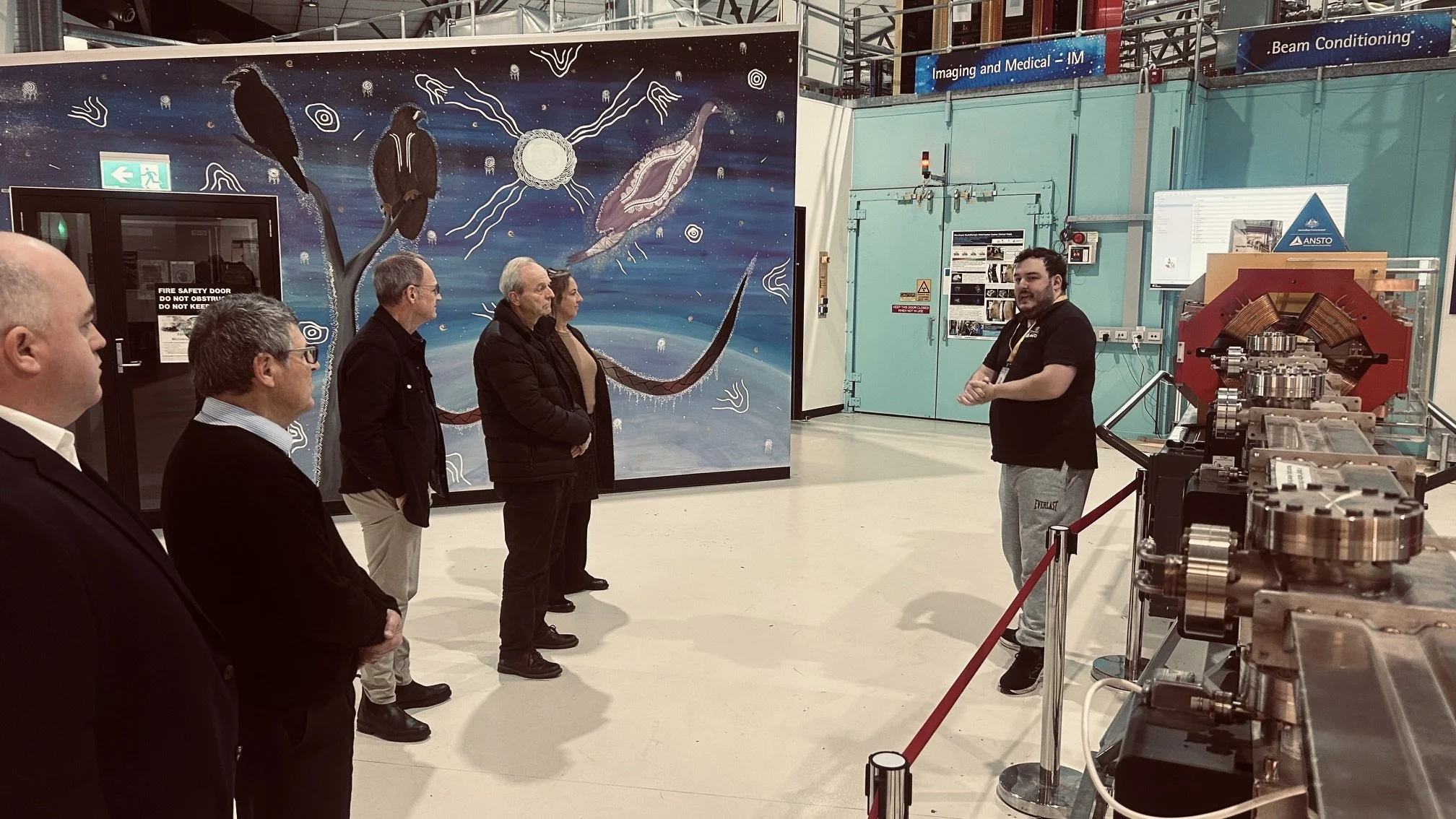
Electrons are guided and focussed by a series of strong electromagnets and may circulate for hours or even days at a time. As the relativistic electrons’ path is bent by magnetic fields, they emit electromagnetic radiation called ‘synchrotron light’. The synchrotron light is emitted in a narrow, forward-directed beam, with an intensity that can reach a million times brighter than the sun.
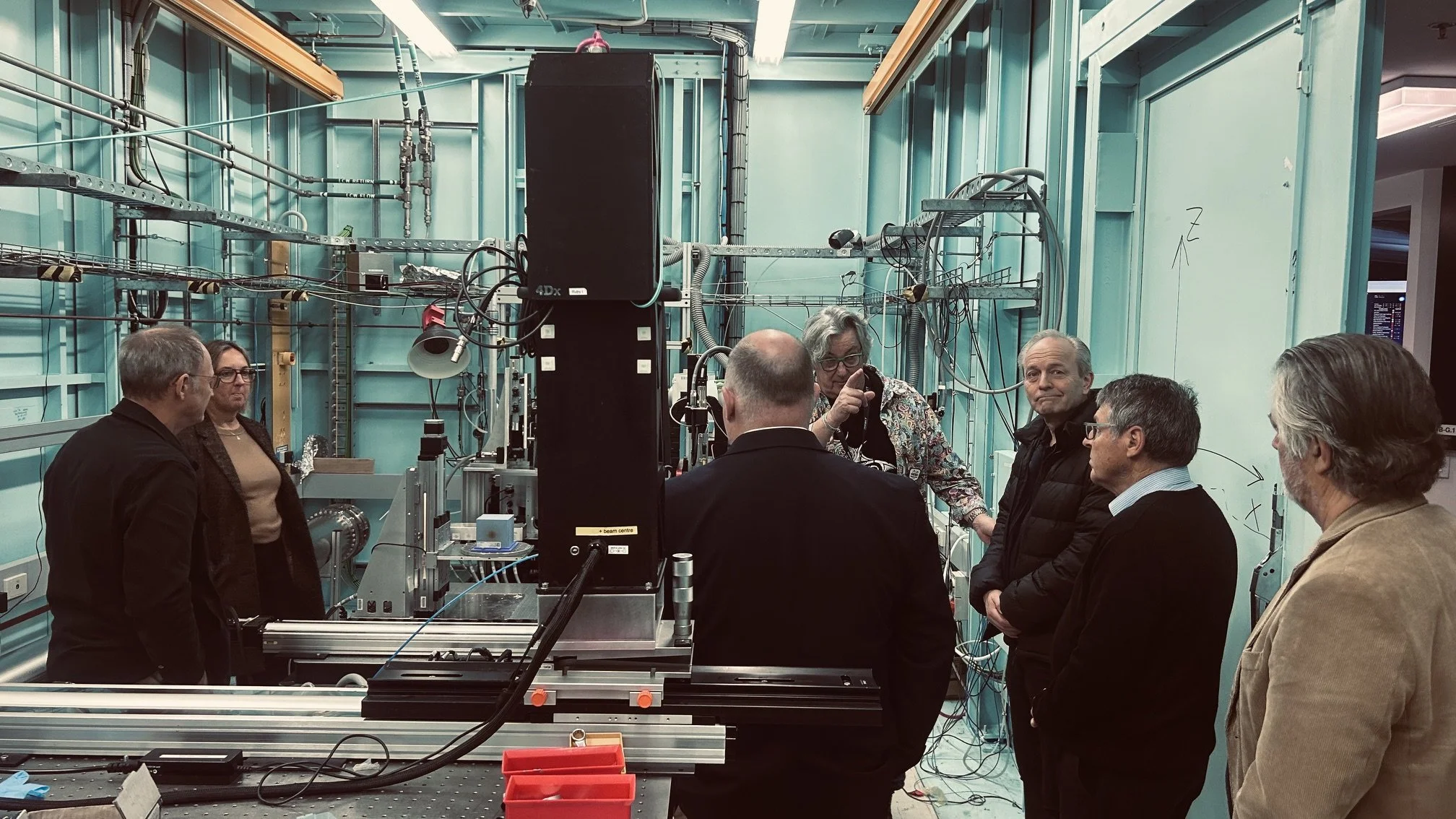
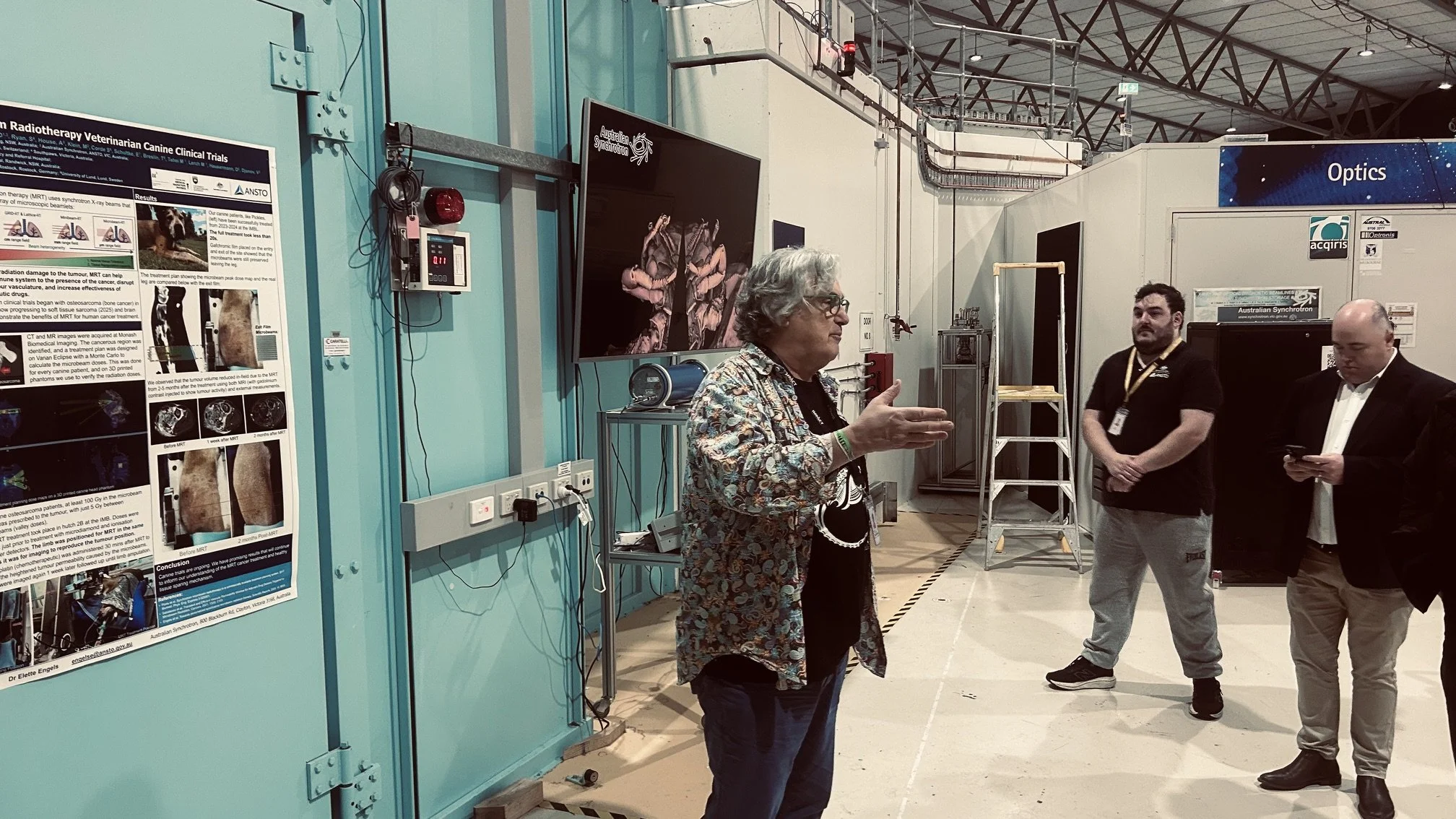
Channelled into experimental workstations via ‘beamlines’, the light then interacts with sample materials. A wide array of research is conducted using the synchrotron light, which can be broadly categorised by analysis technique, be it diffraction and scattering, spectroscopy, or imaging. Each beamline is tailored towards a particular technique with specialised equipment.
There are currently 14 operational beamlines with plans to expand the suite with an additional four beamlines (Project BRIGHT).